Elite Winter Sports, Everyday Movement & Why Your Body Needs Load Tolerance
Winter sports showcase power, control, and resilience. But underneath the graceful spectacle is something much more universal:
Load.
Rotation.
Deceleration.
Single-leg stability.
Impact absorption.
Endurance under fatigue.
And here’s the important part:
Those same movement demands show up in everyday life.
At Pulse Chiropractic & Wellness, Dr. Andrew Rill has worked with Olympic-level and elite athletes, helping them manage extreme physical stress. He applies those same performance principles — mobility optimization, spinal alignment under load, corrective exercise, and recovery strategy — to active adults who want to stay strong, capable, and pain-free.
Because whether you’re skiing down a mountain or lifting a suitcase into overhead storage, your body is still managing force.
How Winter Sport Movements Show Up in Everyday Life
Curling: Deep Lunge Stability & Hip Control
Winter Demand:
Sustained deep lunges with rotational force.
What Breaks Down:
- Tight hip flexors
- Adductor strain
- Low back compensation
Everyday Equivalent:
- Getting up and down from the floor
- Gardening
- Playing with kids
- Lunging during workouts
- Kneeling and standing repeatedly
When hip mobility is limited, the low back often absorbs the strain.
What Builds Resilience:
- Restoring hip joint mobility
- Improving pelvic control
- Single-leg stability training
- Anti-rotation core strength
Healthy hips protect the spine — in sport and daily life.
Ski Jumping: Impact + Spinal Load
Winter Demand:
High-force landings that compress the spine.
What Breaks Down:
- Thoracolumbar stiffness
- Disc irritation
- Shock absorption deficits
Everyday Equivalent:
- Jumping in workouts
- Running
- Stepping off curbs
- Carrying heavy loads
- Slipping on ice
Even small impacts accumulate when the spine can’t distribute force efficiently.
What Builds Resilience:
- Segmental spinal mobility
- Core strengthening training
- Posterior chain strength
- Controlled landing mechanics
Spinal durability isn’t about avoiding movement — it’s about tolerating it.
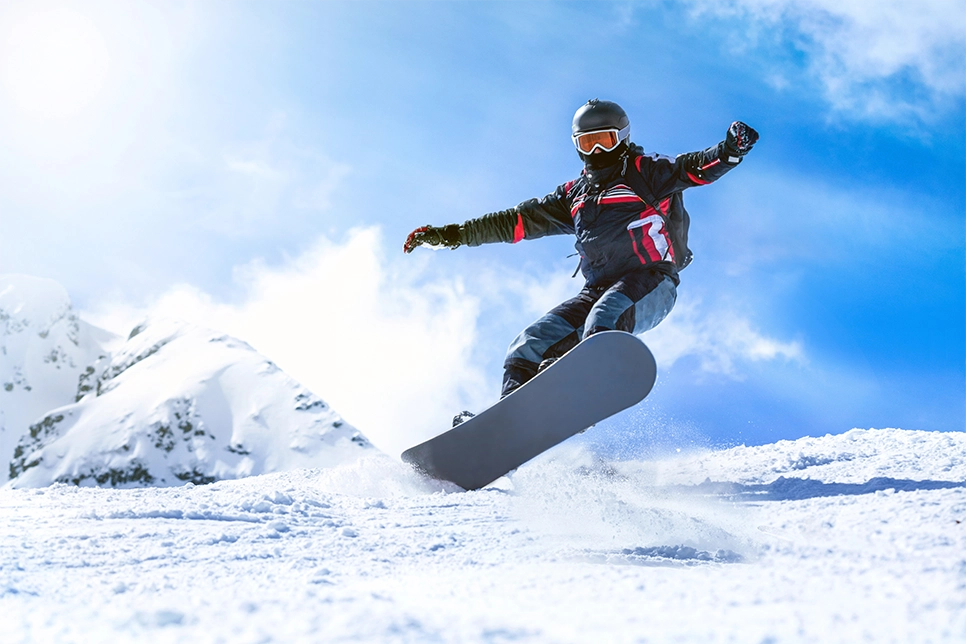
Snowboarding: Rotation Under Load
Winter Demand:
Asymmetric stance + high-speed rotational control.
What Breaks Down:
- Low back irritation
- SI joint strain
- Knee tracking issues
Everyday Equivalent:
- Twisting to load groceries
- Rotating while lifting
- Shoveling snow
- Rotational workouts
- Golf, tennis, pickleball
Uncontrolled rotation often leads to recurring low back pain.
What Builds Resilience:
- Rotational control training
- Thoracic mobility
- Glute medius strengthening
- Core stability
Controlled rotation protects the spine and knees.
Figure Skating: Single-Leg Landing Precision
Winter Demand:
Explosive jumps + controlled single-leg landings.
What Breaks Down:
- Knee irritation
- Ankle instability
- Glute weakness
Everyday Equivalent:
- Walking on uneven ground
- Climbing stairs
- Stepping off ladders
- Trail walking
- Single-leg strength exercises
Most people don’t train single-leg control — but they use it constantly.
What Builds Resilience:
- Single-leg stability drills
- Ankle mobility work
- Eccentric quad strength
- Hip stability programming
Strong hips and ankles protect the knees.
Alpine Skiing: Knee Stability Under Repetition
Winter Demand:
Repeated deceleration and quad endurance.
What Breaks Down:
- ACL strain
- Quad dominance
- Hip weakness
Everyday Equivalent:
- Long hikes
- Squatting repeatedly
- Climbing stairs
- Prolonged standing
- High-rep strength workouts
If hips aren’t stabilizing, knees absorb excess force.
What Builds Resilience:
- Hip abductor strengthening
- Isometric quad endurance
- Proprioception training
- Load management strategies
Knee pain is often a hip control issue.
Luge: Neck Stability Under Force
Winter Demand:
Cervical endurance under G-force.
What Breaks Down:
- Neck tension
- Cervical compression
- Thoracic rigidity
Everyday Equivalent:
- Long hours at a desk
- Driving
- Looking down at phones
- Travel fatigue
Neck pain is rarely just about posture — it’s about stability and endurance.
What Builds Resilience:
- Deep neck flexor training
- Thoracic mobility work
- Anti-extension core drills
- Ergonomic load awareness
Stability reduces strain.
Ski Mountaineering: Endurance Under Fatigue
Winter Demand:
Prolonged climbs and descents under load.
What Breaks Down:
- Overuse hip irritation
- Knee breakdown
- Lumbar compensation
Everyday Equivalent:
- Long travel days
- Full workweeks
- Back-to-back workouts
- Moving heavy items
- Weekend activity spikes
Fatigue changes mechanics — and altered mechanics increase injury risk.
What Builds Resilience:
- Core endurance circuits
- Hip stability progressions
- Load carriage mechanics
- Proactive recovery care
Consistency requires durability.
Why This Matters for Active Adults
You don’t need to compete in winter sports to experience:
- Low back pain
- Knee stiffness
- Hip tightness
- Neck tension
- Recurrent overuse irritation
Those symptoms often reflect:
- Reduced joint mobility
- Poor rotational control
- Weak single-leg stability
- Fatigue-related compensation
- Limited spinal load tolerance
Performance-based chiropractic care focuses on correcting those movement deficits before they escalate.
At Pulse Chiropractic & Wellness, care integrates:
✔ Detailed movement assessment
✔ Hands-on joint adjustments
✔ Soft tissue therapy
✔ Corrective exercise programming
✔ Stability and mobility training
✔ Load management strategy
This is proactive durability care — not reactive symptom care.
Frequently Asked Questions
Why do I get knee pain after skiing or hiking?
Repeated deceleration and quad dominance often overload the knee when hip stability is insufficient. Improving hip control and joint mechanics reduces stress on the knee.
Why does my low back hurt after shoveling or twisting?
Rotational movements require thoracic mobility and core control. If those are limited, the lumbar spine compensates — leading to irritation.
Can chiropractic care help prevent winter-related injuries?
Yes. Improving spinal mobility, joint alignment under load, and neuromuscular control reduces compensation patterns that increase injury risk.
Is this type of care only for athletes?
No. Anyone managing physical stress — workouts, desk posture, parenting, travel, yard work — benefits from improved mobility and load tolerance.
When should I seek care?
If you notice:
- Recurring stiffness
- Pain after activity
- Limited rotation
- Reduced performance
- Fatigue-related breakdown
…it’s time to assess how your body is handling load.
Move Freely. Live Fully.
Winter sports reveal what the body must tolerate.
Every day life does too.
The goal isn’t just to avoid injury.
It’s to build durability.
At Pulse Chiropractic & Wellness, Dr. Andrew Rill applies elite-level movement principles to help active adults move better, recover faster, and stay resilient in every season.
Schedule your assessment today.
Move Freely. Live Fully.